
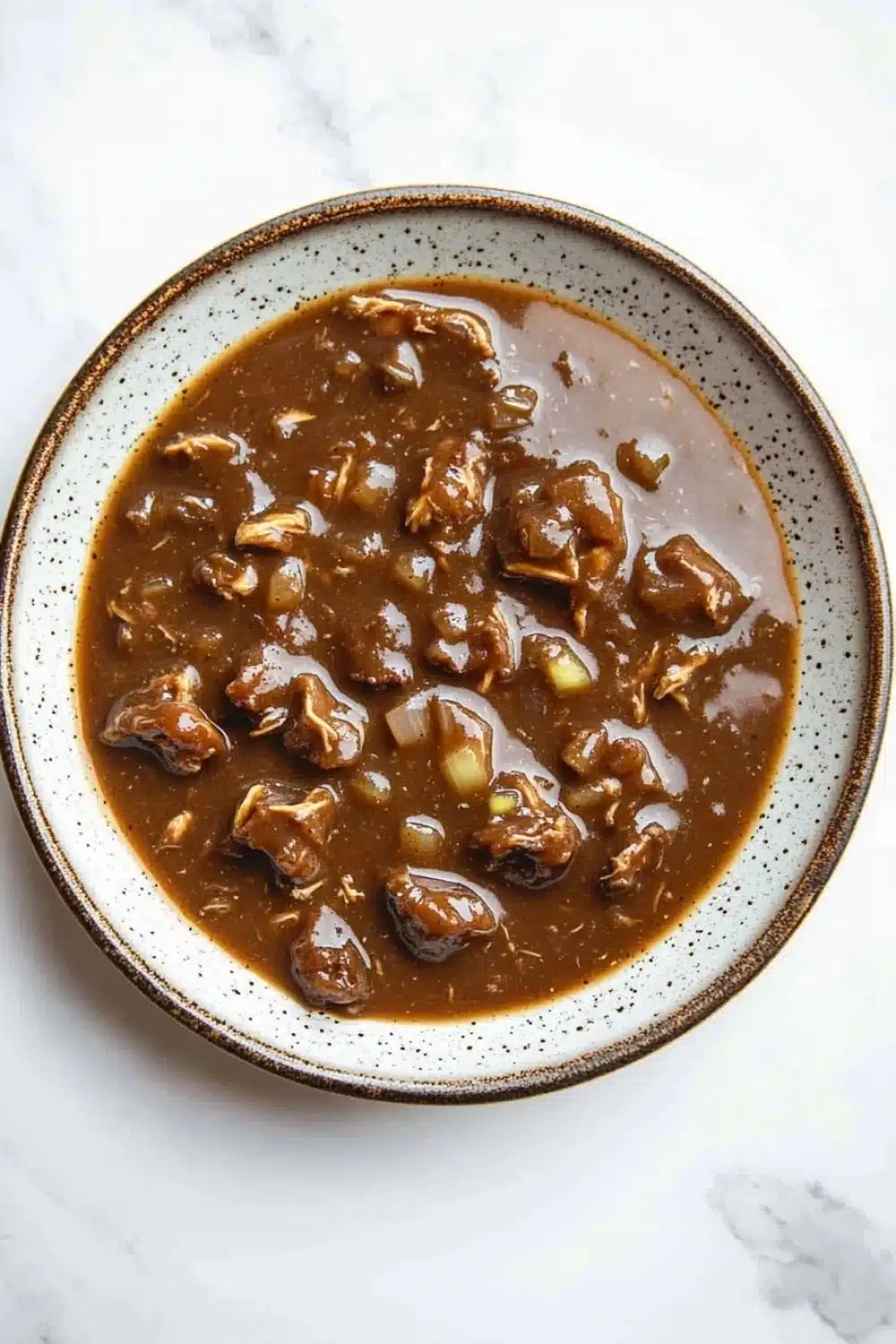
Gravy game strong.
There’s something mesmerizing about a pot simmering on the stove, aromas weaving through the air like a well-told yarn. I remember the first time I nailed a dual broth gravy—beef and chicken blending into one rich, meaty hug. That moment when you whisk in the broths and the roux starts to thicken? Pure kitchen gold.
Butter melting, onions sweating, garlic sizzling—each step a building block of flavor. It’s not just about draping gravy over mashed potatoes or roasted meat; it’s the thick, glossy cascade that turns humble plates into a stick-to-your-ribs feast. No one’s ghosting this sauce at the dinner table.
Ready to roll up your sleeves and make a gravy that hits all the right notes? Let’s get saucy.
For a delicious twist on beef chicken gravy, try our Hearty Beef Rice Veggie Casserole for Comforting Dinners that’s perfect for cozy nights.
Real-Life Perks of Beef and Chicken Gravy
- Transforms basic mashed potatoes into a couch-potato-worthy feast that even picky eaters can’t resist.
- Combines two rich flavors—beef and chicken—making it a one-stop gravy for whatever meat or veg you’re rocking that night.
- Quick to whip up (just 35 minutes total), so you’re not stuck babysitting the stove for hours.
- Reheats like a champ—perfect for those ‘leftover remix’ meals without losing its thick, luscious texture.
- Has that secret weapon ingredient (Worcestershire sauce) that adds a sneaky umami kick—your taste buds will know what’s up.
Beef and Chicken Gravy

A rich and savory gravy combining the flavors of beef and chicken, perfect for drizzling over mashed potatoes, roasted meats, or vegetables.
- Prep Time: 10 minutes
- Cook Time: 25 minutes
- Total Time: 35 minutes
- Yield: 6
Ingredients
2 tablespoons unsalted butter
1 small yellow onion, finely chopped
2 cloves garlic, minced
2 tablespoons all-purpose flour
2 cups low-sodium beef broth
1 cup low-sodium chicken broth
1 teaspoon Worcestershire sauce
1/2 teaspoon dried thyme
1/4 teaspoon black pepper
1/2 teaspoon salt
Instructions
In a medium saucepan, melt the butter over medium heat.
Add the finely chopped onion and sauté for 5 minutes, stirring occasionally, until the onion is soft and translucent.
Add the minced garlic and cook for 1 minute until fragrant.
Sprinkle the all-purpose flour over the onion and garlic mixture, stirring constantly to form a roux. Cook for 2 minutes, stirring frequently, until the roux is golden and slightly toasted.
Slowly whisk in the beef broth and chicken broth, ensuring no lumps form.
Add Worcestershire sauce, dried thyme, black pepper, and salt. Stir to combine.
Bring the mixture to a gentle boil, then reduce heat to low and simmer for 15 minutes, stirring occasionally, until the gravy thickens to your desired consistency.
Taste and adjust seasoning if necessary before serving.
Explore more:
Dinner Recipes
Mastering Beef and Chicken Gravy: Tricks, Twists, and Troubleshooting
The Magic Behind the Roux—Why Flour and Butter Are Your Best Buddies
Let’s get real—flour and butter aren’t just pantry fillers, they’re the backbone of this gravy’s luscious texture. When you melt butter and toss in flour, you’re crafting a roux, a classic thickening agent that turns watery broth into a silky, coat-your-spoon sauce. But here’s the kicker—timing and heat control are everything. Too high a flame and your roux can scorch; too low and it won’t toast enough, leaving a floury bite that’s a dead giveaway of rookie gravy mistakes. Toasting that roux until it’s golden, not brown, unlocks those nutty undertones without any burnt bitterness. I remember the first time I nailed this step—it felt like I’d cracked a secret code. That’s when gravy went from ‘meh’ to mouth-watering. So, don’t rush. Stir constantly and keep the heat in check. Your patience pays off in every velvety drop.
Swap It Like a Pro: Ingredient Hacks to Make Your Gravy Sing
Can’t source low-sodium broths? No sweat. Grab regular beef and chicken broths, then go easy on the salt—because those sodium levels can sneak up and wreck your balance.
Butter playing hard to get? Olive oil steps in as a solid understudy, lending a slightly fruity note that actually complements the thyme.
Forgot the Worcestershire sauce? A splash of soy sauce or even a dash of balsamic vinegar will fill that umami void. Experimentation is the name of the game here—sometimes swapping one pantry staple leads to unexpected flavor fireworks.
And here’s a curveball—those dried herbs can be swapped for fresh if you’ve got ‘em on hand. Just toss them in towards the end so their flavors stay punchy, not muddled.
I often throw in a pinch of smoked paprika for that gentle woodsy kick. It’s like giving your gravy a secret handshake with your taste buds.
When Gravy Goes South: How to Fix the Usual Suspects
Gravy too thin? Here’s a quick fix—whisk a teaspoon of flour or cornstarch mixed with cold water into the simmering gravy. Keep stirring; it thickens up fast. No clumps, no fuss.
Too salty? Rescue mission time. Add a peeled, quartered potato into the pot and simmer for 10 minutes. The taters soak up excess salt like a sponge. Just fish it out before serving.
Lumps creeping in? This one’s usually a roux or whisking fail. Next round: add broth slowly while whisking vigorously—like you’re trying to tame a wild bronco. Strain if you must; no shame in that game.
Bland flavor? Boost that umami with a splash more Worcestershire or a tiny dab of anchovy paste if you’re feeling adventurous. Trust me, it’s the gravy’s secret weapon.
Every gravy hiccup is just a plot twist in your kitchen saga—and knowing these fixes means you can roll with the punches and still serve a killer sauce.
Beef and Chicken Gravy FAQ
Got questions? I’ve got answers.
Yes, you can—but watch the salt levels. Regular broth tends to pack more punch, so taste as you go to keep it balanced.
This one’s a classic rookie mistake—never dump all your broth in at once. Slowly whisk it in, like you’re coaxing a shy cat out of hiding. Patience makes it smooth and silky, no lumps playing hide and seek.
Absolutely. Make it a day before and refrigerate. When ready, reheat gently—stir it often, and if it gets too thick, a splash of broth or water wakes it right up.
No, because of the all-purpose flour used to thicken it. To go gluten-free, swap the flour for cornstarch or a gluten-free flour blend—just mix it with a little cold broth first to avoid clumps.
Pop the leftovers into an airtight container and chill for up to 3 days. When reheating, take it slow on the stove with a bit of stirring—rush it, and you risk the gravy breaking or sticking to the pan.