
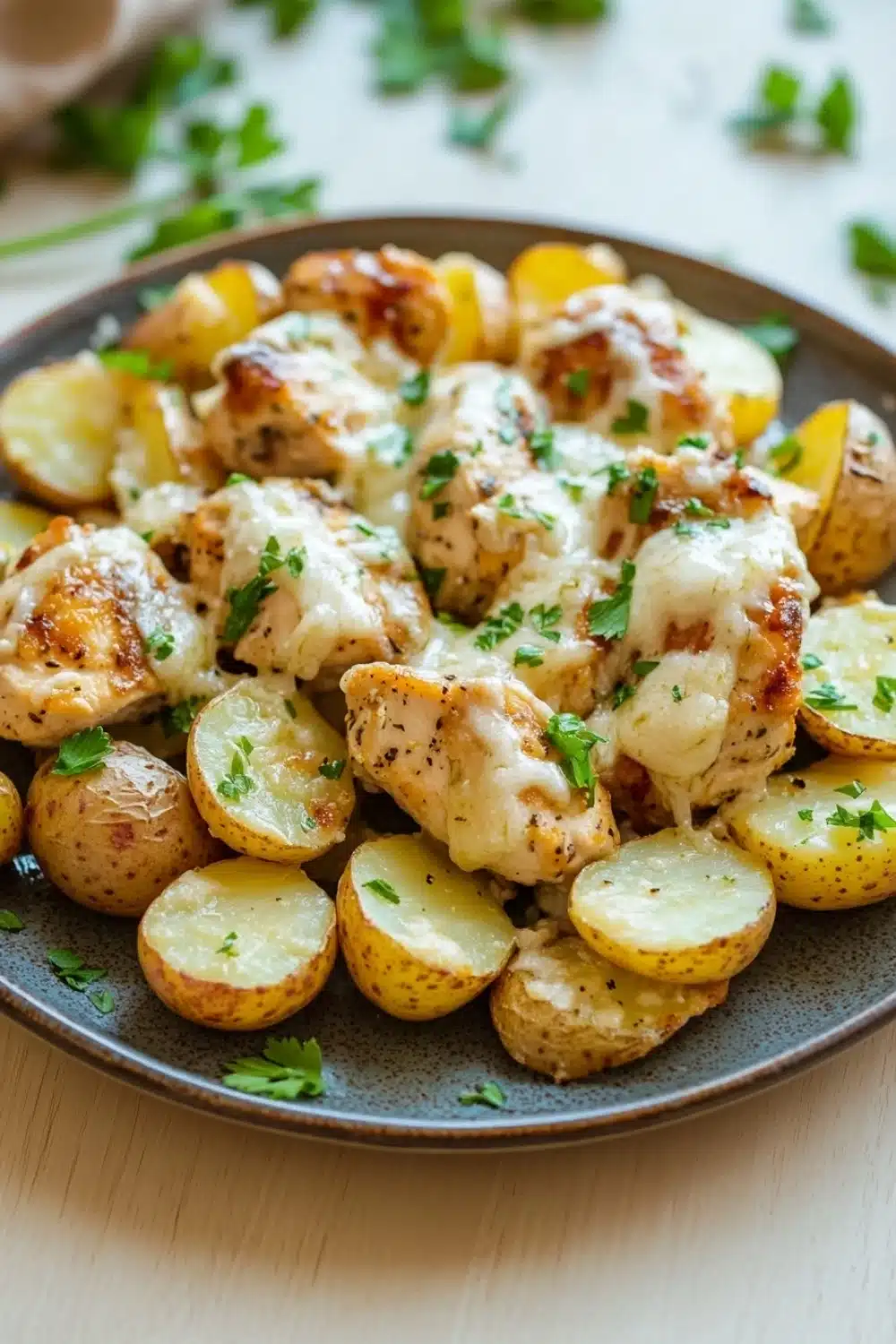
Here’s the deal: comfort food just got a glow-up.
Picture a skillet sizzling on the stove, the air thick with garlic’s punch and Parmesan’s cheesy whisper. The sound of baby potatoes crisping up—golden and inviting—melds with the tender chicken pieces browning beside them. It’s the kind of moment where kitchen chaos feels more like a well-oiled dance.
I’ve always believed that the best meals come from one pan—less mess, more flavor mingling. As the garlic hits the hot oil and the butter melts into the broth, the magic really starts. This isn’t just dinner; it’s a love letter to simple ingredients coming together with serious swagger.
Trust me—once you try this skillet, you’ll be hooked. No faffing about, just honest, hearty food that speaks for itself.
If you’re looking for an easy weeknight meal, try this Ground Beef Italian Skillet: Quick, Hearty Flavor for Dinner for a delicious and satisfying dish.
Real Life Benefits of Garlic Parmesan Chicken Potato Skillet
- One-pan wonder—cleanup is a breeze when you only dirty a single skillet.
- Meal prep win: feeds four hungry mouths with minimal fuss and maximum flavor.
- Hands-off cooking for the busy bees—potatoes crisp while chicken simmers in one spot.
- Flavor punch without the brain drain—garlic, Parmesan, and Italian seasoning do the heavy lifting.
- Leftovers reheat like a charm, making lunch the next day just as tasty as dinner.
Garlic Parmesan Chicken Potato Skillet

A delicious one-pan meal featuring tender chicken breasts, crispy golden potatoes, and a rich garlic Parmesan sauce, all cooked together in a skillet for an easy and flavorful dinner.
- Prep Time: 15 minutes
- Cook Time: 30 minutes
- Total Time: 45 minutes
- Yield: 4
Ingredients
1 pound boneless skinless chicken breasts, cut into 1-inch pieces
1 pound baby potatoes, halved
3 tablespoons olive oil, divided
4 cloves garlic, minced
1 teaspoon dried Italian seasoning
1/2 teaspoon salt
1/4 teaspoon black pepper
1/2 cup grated Parmesan cheese
1/4 cup chicken broth
2 tablespoons unsalted butter
2 tablespoons chopped fresh parsley
Instructions
Heat 2 tablespoons of olive oil in a large skillet over medium heat.
Add the halved baby potatoes to the skillet, season with 1/4 teaspoon salt and 1/8 teaspoon black pepper, and cook for 15 minutes, stirring occasionally, until golden and tender.
Push the potatoes to one side of the skillet and add the remaining 1 tablespoon olive oil.
Add the chicken pieces to the skillet, season with the remaining 1/4 teaspoon salt, 1/8 teaspoon black pepper, and dried Italian seasoning.
Cook the chicken for 6-8 minutes, stirring occasionally, until browned and cooked through.
Add the minced garlic to the skillet and cook for 1 minute until fragrant.
Pour in the chicken broth and add the butter, stirring to combine and scrape any browned bits from the bottom of the skillet.
Sprinkle the grated Parmesan cheese over the chicken and potatoes, stirring gently to coat everything evenly.
Cook for an additional 2-3 minutes until the sauce thickens slightly.
Remove from heat and garnish with chopped fresh parsley before serving.
Explore more:
Dinner Recipes
Mastering Garlic Parmesan Chicken Potato Skillet: Tips, Tweaks & Troubleshooting
The Potato Play: When to Swap and Why It Works
Not all potatoes are created equal—baby potatoes bring that tender, waxy bite that crisps beautifully without turning to mush. But what if you’re fresh out? I’ve danced with alternatives—the Yukon Golds step in as the MVPs here. Their creamy flesh holds up well, giving you that coveted golden crust without sacrificing the fluff inside. Russets? Sure, but only if you parboil first; otherwise, they fall apart like a house of cards. And don’t overlook parsnips or even turnips for a twist—they change the game with subtle earthiness, perfect if you want to sneak in some veggie variety.
Why That Garlic Parmesan Sauce Works—No Magic Needed
Here’s the lowdown: the magic’s in timing and texture, not some secret potion. Garlic gets minced and tossed in only after the chicken’s cooked through—this prevents bitterness and brings out a mellow, aromatic pop. Then, chicken broth and butter slide in, scraping up those browned bits (fond) that are pure gold. Parmesan acts like a thickening agent, melting and bonding with the broth to create a sauce that clings like a charm. No cream, no fuss—just straight-up savory goodness. Trust me, rushing this step or overheating can cause your sauce to seize or separate. Patience is the secret weapon here; treat each step like a deliberate move in a chess game.
Fixing the Flop: When Your Chicken or Potatoes Won’t Cooperate
Potatoes soggy instead of golden? Two culprits—too much crowding or too low heat. Spread ’em out. No stacking! High and dry heat is your friend. If you still get mushy spuds, finish them under the broiler for a quick crisp-up (watch like a hawk). Chicken turning rubbery? That’s a classic overcook sign—cutting into uniform 1-inch pieces isn’t just for looks; it’s your insurance policy for even cooking. Mid-cook, toss in a splash of broth if it’s drying out. And if you catch yourself burning garlic? Immediate rescue: remove skillet from heat, add broth early, and stir vigorously. It’s like hitting the undo button on bitter bits.
Garlic Parmesan Chicken Potato Skillet FAQs
- Can I use frozen chicken for this recipe?
- Yes, but thaw it completely before cooking to ensure even cooking and safety.
- What type of potatoes work best here?
- Baby potatoes are ideal because they cook quickly and get that perfect crispy skin. Yukon Golds or fingerlings also work if you want a little variety.
- Is this dish gluten-free?
- Absolutely! None of the ingredients contain gluten, making it a safe choice for gluten-sensitive eaters.
- Can I swap Parmesan for another cheese?
- You can, but Parmesan’s salty, nutty punch gives this dish its signature vibe. Try Pecorino Romano for a sharper twist, or Asiago for a mellow alternative.
- How do I reheat leftovers without losing crispiness?
- The skillet is your best friend here. Reheat on medium heat, stirring occasionally to keep that golden crust alive—microwaving tends to make everything soggy, which is a no-go in my book.